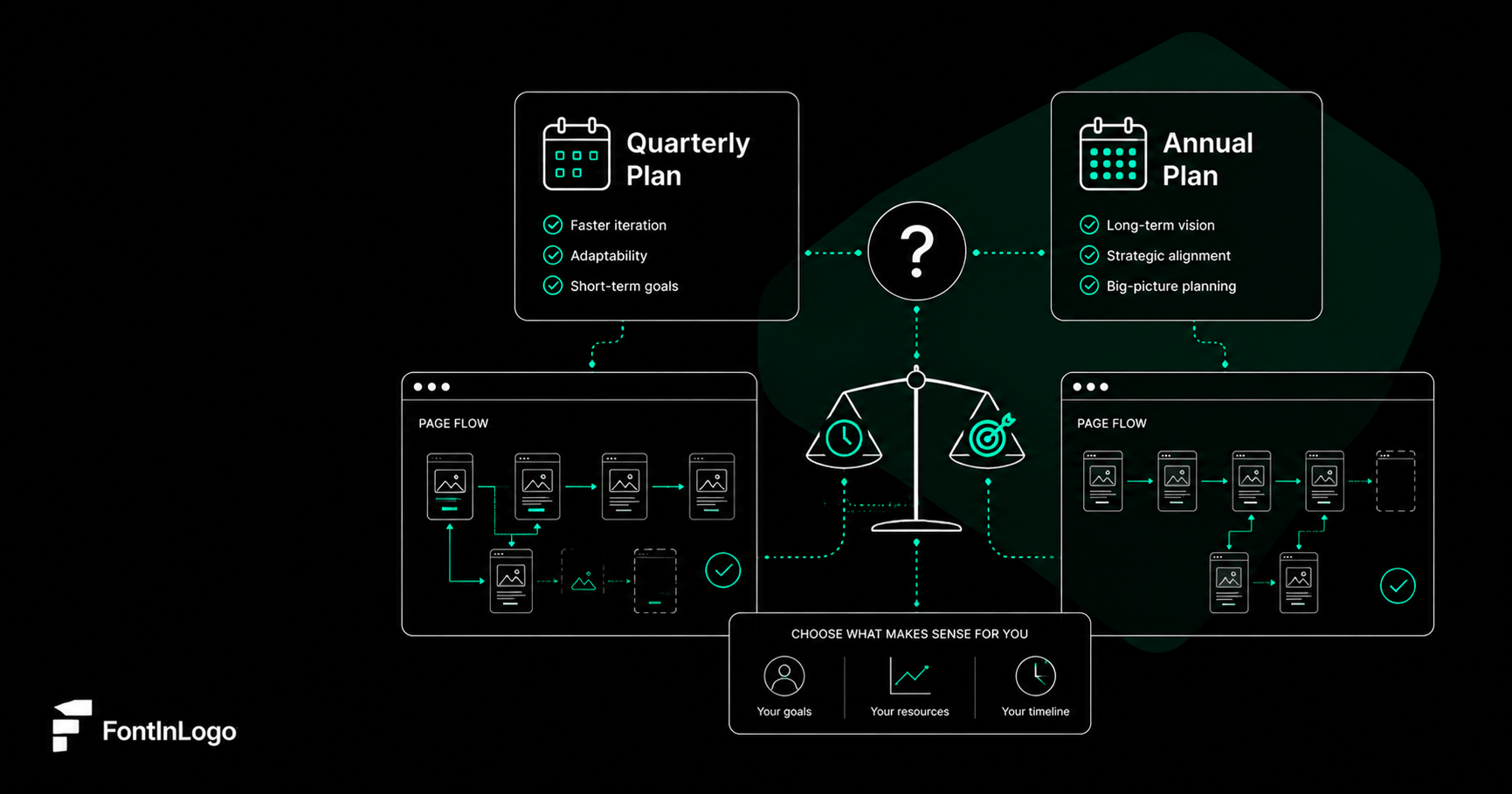
Picking between a quarterly plan and an annual plan sounds simple until it is tied to how a team actually works. A design library can look affordable either way, yet the better choice often depends less on the headline price and more on timing, workflow, and how often people expect to return to it over a few months. On Page Flows, the individual quarterly plan is listed at $13 per user per month and billed at $39 per quarter, while the yearly plan is listed at $8.25 per user per month and billed at $99 per year. Both include a 3 day free trial, unlimited access to user flow recordings, emails, screens and UI elements, enhanced search and filtering, batch screen downloads, and unlimited bookmarks.
That feature overlap matters because this is not a case where the annual plan unlocks a separate product tier. The question is mostly about usage pattern. If someone wants to browse screen references, review recorded flows, and collect email flow ideas during a concentrated stretch of work, the quarterly option can be enough. If they expect recurring use across product reviews, client work, design sprints, and research cycles, the yearly plan usually starts to make more financial sense. The pricing page also labels yearly as the popular option and “Best Value.”
Start with how long the work will actually last
A lot of people choose subscriptions by guessing how motivated they will feel later. That is usually the wrong way to do it. A better starting point is to look at the next real block of work. If the need is tied to one redesign, one app audit, one onboarding overhaul, or one short client engagement, a quarter may already cover the full period when the library will be used heavily.
That is especially true for freelancers, solo designers, and smaller product teams with a clear near-term problem. They may need flow references now, though not in the same volume six months from now. In that case, paying for a shorter billing cycle reduces the chance of carrying a tool longer than the project itself. Page Flows also allows cancellation from the account page, which makes the shorter commitment easier to manage.
The yearly plan fits people who revisit patterns, not only people who browse once
The annual plan becomes more sensible when Page Flows is part of an ongoing design habit rather than a one-time research spike. Product designers, founders, UX leads, and agencies often return to the same kind of library at several points in a quarter. They may check onboarding patterns one week, dashboard structures later in the month, then revisit checkout flows or email references during a launch cycle.
In that kind of workflow, the subscription acts more like infrastructure than a temporary research expense. The listed billing numbers make that pretty clear. Four quarters at $39 each add up to $156 over a year, while the annual plan is billed at $99, which is a $57 difference. Based on those listed totals, the annual option costs about 36.5% less than paying for four quarterly cycles.
If a person expects to come back to the library in three or more separate project phases across a year, the annual plan starts looking less like a gamble and more like the cleaner decision. That is even more true when saved bookmarks and repeat searching are part of the routine.
Teams should also think about seat structure, not only individual cost
The plan choice changes again when multiple people need access. Page Flows also offers a team plan billed at $199 per year for 3 users, with higher user counts listed after that. That shifts the decision away from one person’s habits and toward shared workflow. A team doing regular product reviews, competitor analysis, and pattern benchmarking may lose more time passing screenshots around than it saves by keeping access narrow.
For individual buyers, though, the real comparison remains quarterly versus annual. The core issue is whether the research need is temporary, cyclical, or continuous. A continuous need usually favors annual billing. A sharply bounded need, especially one tied to a current sprint or contract, can still make the quarterly option the more reasonable purchase.
A few practical questions make the decision easier
Before choosing a plan, it helps to answer a small set of questions:
- Is the subscription for one project or for repeated reference work?
- Will the buyer use flows, screens, emails, and UI elements across several months?
- Is the work solo, or will the same references be discussed across a team?
- Will bookmarks and repeat searching matter after the first research pass?
- Is budget flexibility more important right now than the lower yearly total?
Those questions usually surface the answer faster than comparing monthly figures alone. The cheaper-looking monthly number on the annual plan is helpful, though the real signal is whether the person expects ongoing reuse.
The choice is partly about time horizon, though also about honesty
The unusual part of this decision is that it says something about the buyer’s working style. The quarterly plan suits people who want focused access during a specific phase and do not want to overcommit. The annual plan suits people who already know their design process is repetitive, reference-driven, and spread across the year.
So the better plan is not always the one with the lower monthly figure, and it is not always the shorter commitment either. The better plan is the one that matches how often the library will actually be opened after the first burst of enthusiasm wears off. If the answer is “a lot, and probably all year,” annual is the cleaner fit. If the answer is “for this project, then maybe not again for a while,” quarterly may be the smarter way to buy.