How AI Is Reshaping Digital Marketing and the Future of Online Content Creation
AI is changing how brands create content. Here's how AI image and video generation fit into modern marketing, and what to keep in mind when using them.
November 1, 2026
AI is changing how brands create content. Here's how AI image and video generation fit into modern marketing, and what to keep in mind when using them.
November 1, 2026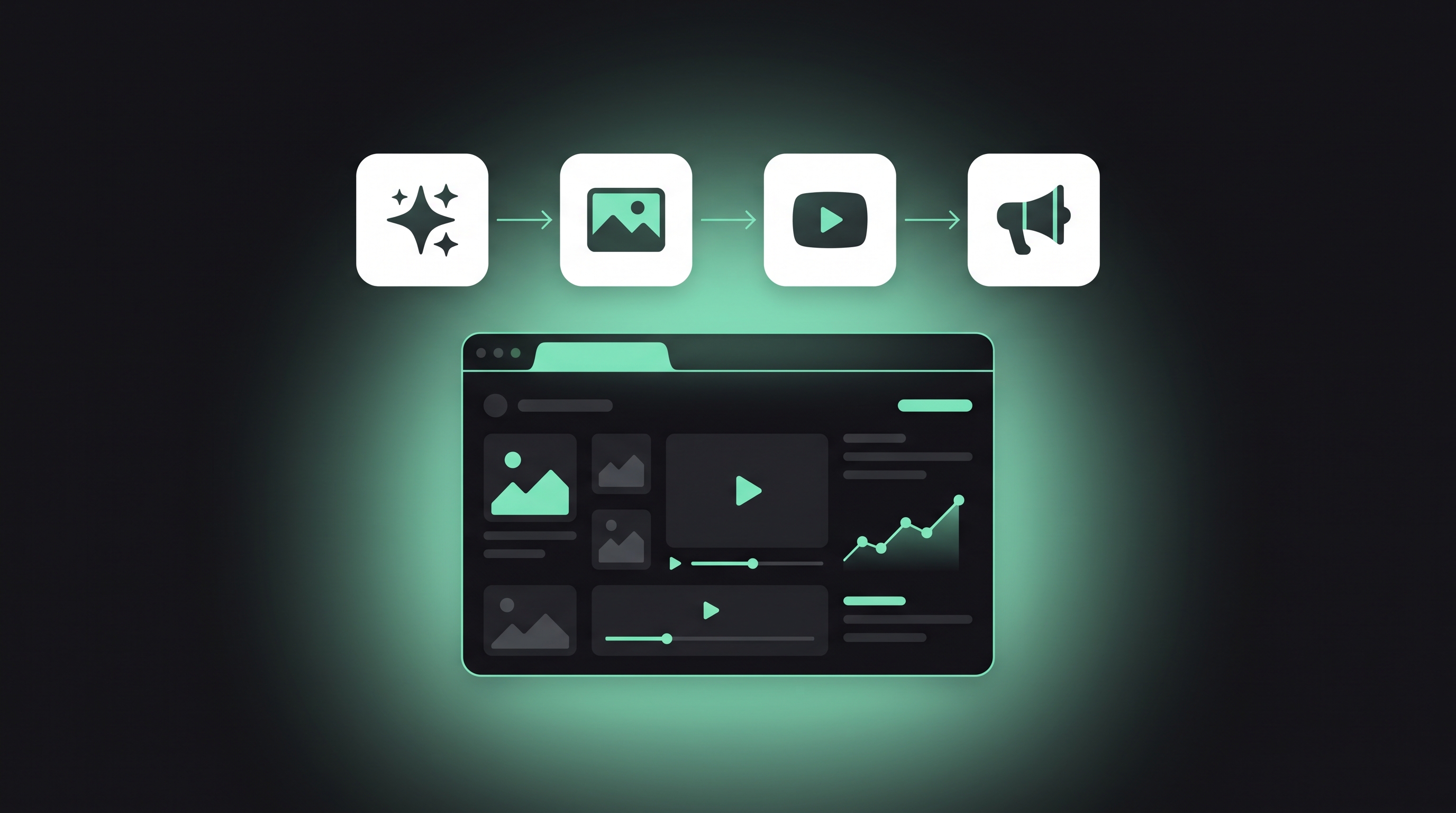
Digital marketing is evolving rapidly as businesses look for new ways to capture attention, communicate with audiences, and create engaging online experiences. Artificial intelligence is playing an increasingly important role in this transformation by helping marketers automate repetitive tasks, explore creative ideas, and produce content more efficiently.
From personalized advertising campaigns to automated visual production, AI technologies are changing how brands approach content creation. What once required specialized software, professional designers, and extensive production resources can now be accomplished through accessible AI-powered platforms.
Today's digital audiences expect fresh, engaging, and visually appealing content. Businesses must consistently publish blog graphics, promotional videos, product images, and social media campaigns to remain competitive.
Meeting these demands can be challenging, particularly for smaller marketing teams with limited resources.
AI tools help address this challenge by simplifying different stages of content production. They can assist with brainstorming, visual development, image editing, animation, and video creation.
Rather than spending hours completing every task manually, creators can use AI to accelerate production while focusing more on creative direction and audience engagement.
Images are among the most important elements of digital communication. A compelling visual can communicate an idea quickly, strengthen brand identity, and make marketing content more memorable.
An AI image generator allows users to create original visuals using written descriptions. Instead of relying entirely on stock photography or traditional graphic design workflows, creators can generate images that align with their specific requirements.
Some ways businesses can use this technology include:
This approach gives marketers greater creative flexibility while reducing the time needed to develop visual assets.
Video content has become a major part of modern marketing strategies. Businesses increasingly rely on short-form videos, product demonstrations, tutorials, and storytelling to connect with potential customers.
However, producing professional video content traditionally involves several stages, including scripting, filming, editing, and post-production.
An AI video generator simplifies many of these processes by allowing users to transform text prompts, images, and creative references into video content.
This technology can support various marketing activities:
Social Media Campaigns: Brands can develop short promotional videos designed for platforms such as Instagram Reels, TikTok, and YouTube Shorts.
Product Demonstrations: Businesses can present product features through engaging visual sequences.
Educational Videos: Creators can turn complicated subjects into more accessible visual explanations.
Storytelling: Marketers can experiment with different scenes, characters, and visual styles to communicate brand messages.
Advertising Content: Teams can explore multiple creative variations before selecting the most effective campaign concept.
As AI video technology continues improving, businesses will have more opportunities to experiment with visual storytelling without depending entirely on traditional production methods.
One of the biggest advantages of modern AI technology is the ability to connect different creative processes.
For example, a marketing team developing a new product campaign might begin by creating promotional images. Those images can then serve as visual references for animated advertisements or short product videos.
A connected workflow can include:
Platforms such as OpenArt support this type of creative experimentation by bringing AI-powered image and video capabilities together in a single environment.
Although artificial intelligence can improve content production, businesses should use these technologies thoughtfully.
Maintain originality: AI-generated content should reflect the brand's identity rather than simply reproduce common creative trends.
Prioritize quality: Every visual asset should be reviewed for accuracy, consistency, and professional presentation.
Understand audience preferences: Different audiences respond to different visual styles, formats, and storytelling approaches.
Respect intellectual property: Businesses should understand the licensing terms and usage rights associated with their AI tools and generated content.
Keep human creativity involved: AI can support production, but strategic thinking, emotional storytelling, and creative judgment remain important.
Artificial intelligence is gradually becoming an essential part of the digital marketing ecosystem. As creative models become more sophisticated, businesses will be able to produce increasingly personalized and interactive content.
The combination of automated image creation, video generation, and intelligent editing will also make it easier for smaller teams to compete in a content-driven digital environment.
However, successful marketing will continue to depend on more than technology alone. Understanding customers, communicating meaningful messages, and developing recognizable brand identities will remain essential.
Ultimately, AI is not just changing how digital content is produced. It is expanding what creators and businesses can accomplish, making creative experimentation faster, more accessible, and increasingly adaptable to the needs of modern audiences.