
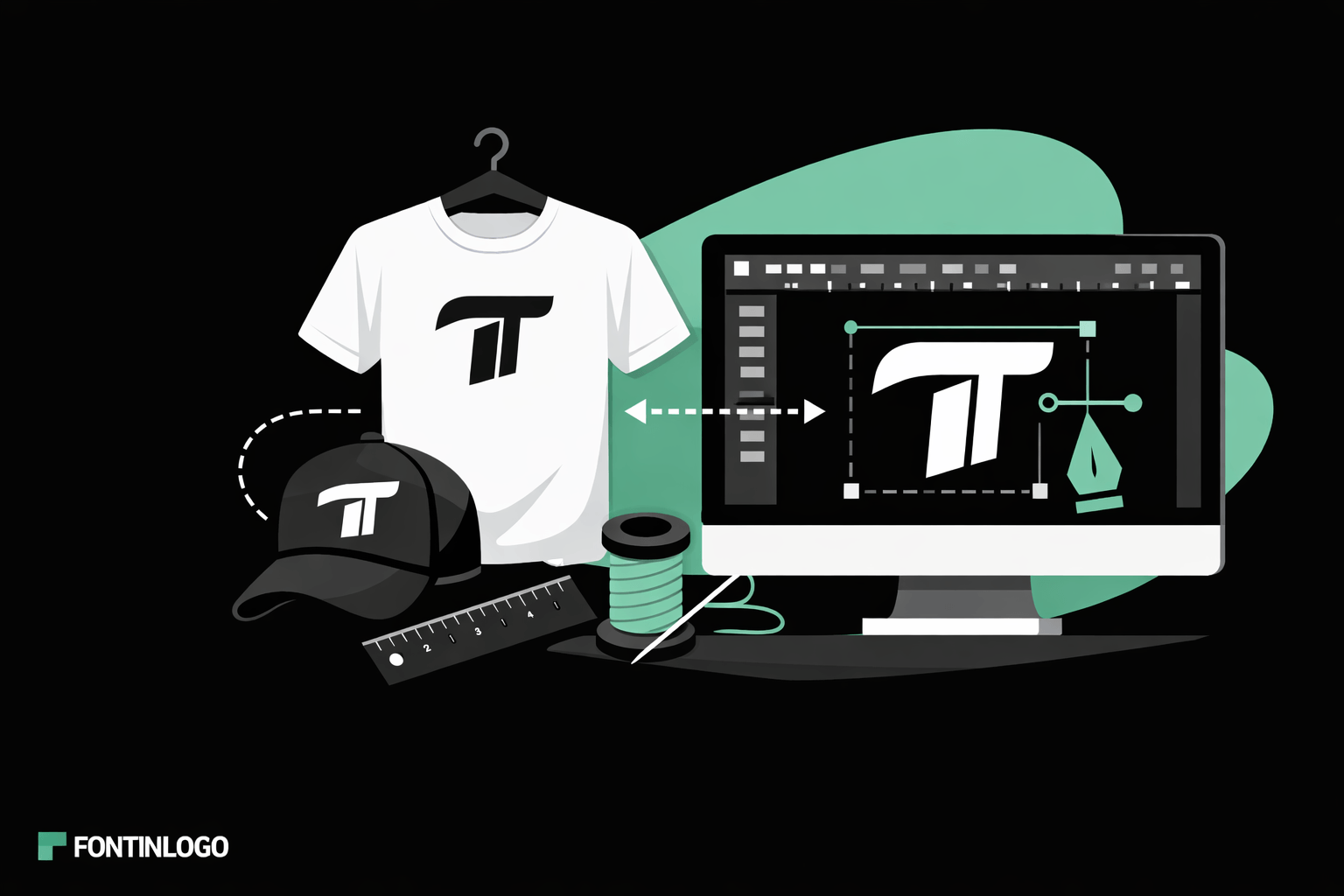
The typeface of a logo is displayed exactly as intended across multiple channels - a website, social media and in search results. This is because digital logos are carefully curated to be pixel-perfect.Taking this same logo offline to be printed on company merchandise, branded stickers or even custom workwear can bring its own challenges.
Typography plays a major role in brand identity, so even the smallest of discrepancies and inconsistencies can dilute brand recognition. This blog will explore how brands ensure their logo typography remains consistent from screen to stitch.
The Shift from Pixels to Materials
Digital typography remains consistent due to varying factors - controlled environments, responsive scaling and consistent lighting all play a role. In contrast, physical typography can vary due to aspects such as fabric texture, thread thickness and ink absorption.
For example, a logo with typography that uses fine serifs and is light weight may become illegible when embroidered. Embroidery doesn’t portray a font in the same way a screen does, it constructs them using stitches, therefore, elegant and dainty fonts may become distorted when embroidered.
On a similar note, printing your typography logo onto packaging or workwear can also affect how a font appears. Fabric type and surface irregularities can alter how intricate details are printed.
Choosing Fonts That Travel Well
Choosing a versatile font that travels well both online and offline is key. Typically, fonts with balanced spacing, moderate stroke contrast and open letterforms look consistent when transferred to an offline medium. In contrast, very thin and highly decorative fonts often lose their striking appearance when printed or embroidered.
Because of this, many brands opt to:
- Research and select typography that is versatile ahead of designing their brand, or
- Develop custom logotypes designed with both digital and physical use in mind
Developing custom typography allows brands to alter how each letter looks in different scenarios. For example, subtle changes to stroke weight or spacing can make a vast difference to print and embroidery results.
Adapting Without Losing Identity
Consistency doesn’t always mean exact replication. In practice, brands often create adapted versions of their logo typography for specific applications.
For embroidery, this might involve:
- Simplifying intricate details
- Increasing stroke thickness
- Adjusting spacing for stitch clarity
For print:
- Tweaking contrast to account for ink spread
- Scaling elements to maintain readability at smaller sizes
It’s very important that such adaptations are controlled and purposely made so that brands can define alternative versions that still feel unmistakably “on brand.”
Strong brand guidelines are very important here. With detailed specifications in place, a logo’s typography is able to remain consistent whether it appears on a website, or is printed on to a custom uniform.
The Role of Production Expertise
Even the best designed typography requires specialist input when translating a logo into embroidery or print. Decoration methods are technical, creative and require a lot of thought to ensure even letterforms, correct proportions and detailing are all conveyed.
Collaborating with highly experienced custom apparel specialists can help to preserve the integrity of a typeface while adapting it for the desired fabric. Specialists like A.M. Custom Clothing can offer advice and expertise on producing consistent results across all printed and embroidered merchandise.
Scaling Across Touchpoints
Nailing the consistency of typography is, of course, not just limited to on screen and branded clothing. It expands across every touchpoint your audience will encounter. Uniforms, branded merchandise, packaging and signage will all contain your typography logo in some form.
Each environment comes with its own challenges. A large scale typography logo may look flawless on a billboard or signage, but may lose clarity when reduced for an embroidered cap or polo shirt, when tight spacing can close up. On the other hand, a delicate and minimal typography text that works well on clothing may look too thin and light when scaled up for larger placements.
Successful brands think of the bigger picture, not single-use cases, and so they create flexible frameworks, allowing typography to scale and remain consistent across all placements, without losing brand identity.
Testing in the Real World
Testing different typography in real-life conditions is one of the most overlooked steps in maintaining consistency and brand recognition.
This could look like ordering a handful of embroidered garments from different suppliers, testing different print and embroidery methods, printing on different materials and surfaces and reviewing the results in different settings to assess how the typography looks in different light.
By iterating on these insights, brands can refine their typography before rolling it out at scale, ensuring consistency where it matters most.
Why It Matters
Typography plays a huge role in brand recognition. Whilst customers may not consciously analyse letterforms, they notice when something feels off or slightly different. And when these small consistencies keep occurring across different brand touchpoints, brand recognition can be weakened.
However, when executed correctly, typography reinforces trust and sends a clear message of professionalism to consumers.
From Design to Delivery
The key to keeping typography consistent from screen to stitch and everything in between is by understanding how it looks and behaves across different mediums, surfaces and environments. Planning from the offset, ordering real-life samples, and testing a typeface in different scenarios are all crucial components that will help protect brand identity.
When executed correctly, the results are seamless, leaving a logo recognisable no matter the size or placement.
If you’re in the process of designing or refining your logo, resources like Font in Logo are a valuable starting point. Understanding the origins, characteristics, and real-world applications of different fonts can help you choose typography that not only looks good on screen, but performs just as effectively across every physical touchpoint.
