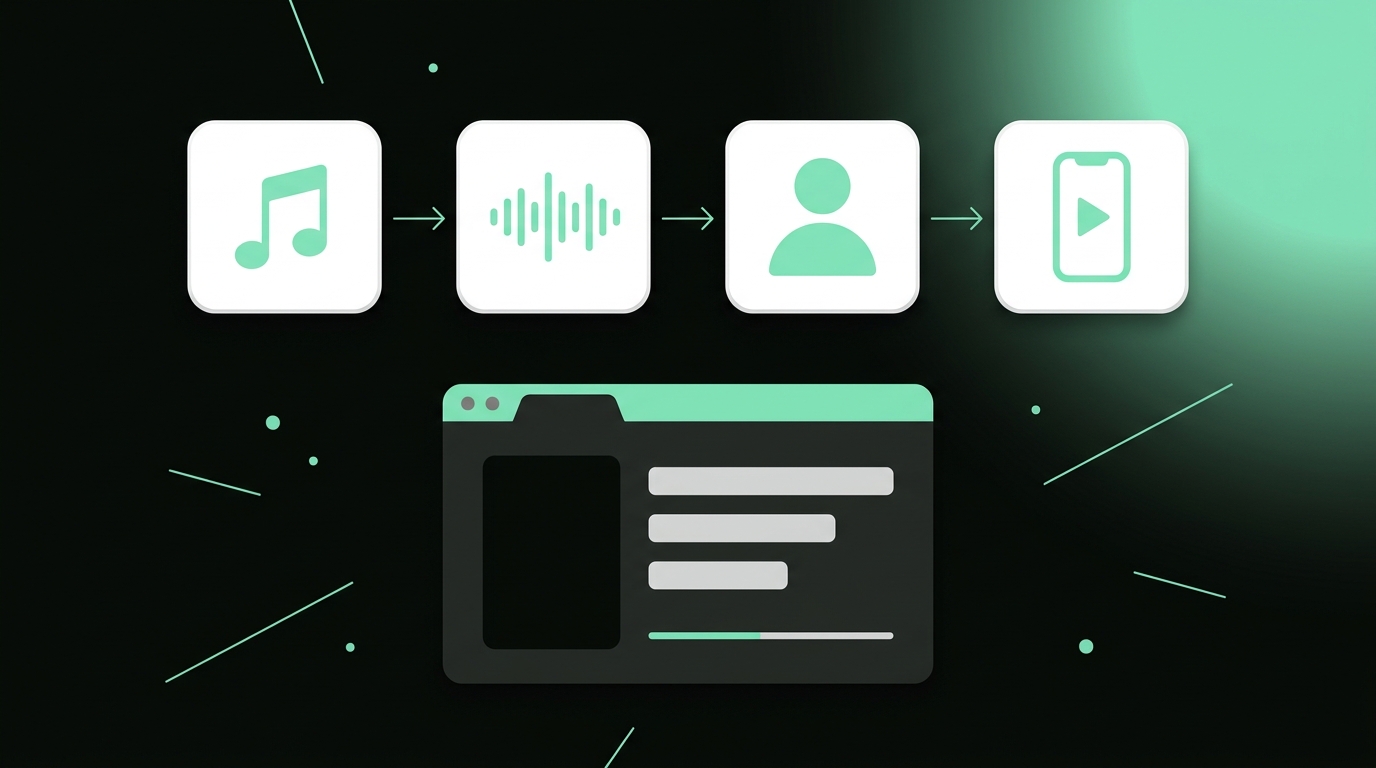
Social media creators rarely work with only one type of media. A single campaign may need an original song, a singing character, vertical video, captions, and several platform-specific edits. In 2026, an AI Song Generator can handle the audio side of that workflow, while a Lip Sync AI Free tool can turn the finished track into a performance video that is easier to publish on TikTok, Instagram Reels, or YouTube Shorts.
The best tools for this kind of creator are therefore not necessarily five identical products. What matters is how well each one fits into a complete content pipeline: create the music, build the visual performance, refine the voice or character, and package the result for social publishing.
Here are five AI tools that work especially well for creators producing music-driven social content.
1. MakeSong
Pros
MakeSong is particularly useful when the song is already finished and the next task is turning that audio into a visual performance. Its music-focused lip-sync workflow is built for complete songs rather than only short speaking clips, which gives social creators more flexibility when they want to publish a chorus teaser, a full performance, or several edits from the same track.
For creators searching for a Lip Sync AI Free solution, MakeSong offers a direct workflow based on audio plus an image. The current lip-sync music video tool accepts MP3 or WAV uploads of up to 10 minutes and supports JPG, PNG, or WebP images. It also includes single-shot and automatic multi-shot options, which can help creators choose between a simple singing portrait and a more dynamic music-video style.
Another advantage is that the platform can automatically generate lyric subtitles and allows users to provide a visual prompt. For multi-person images, a masking feature can be used to indicate which person should sing, reducing the chance that the wrong face is animated.
How to Use
Start with a finished track, vocal recording, or short audio clip that you want to turn into social content. Upload the music, then add a portrait or character image. Choose the single-shot option for a simple performance or the multi-shot mode when you want the AI to create more variation across the video.
If the source image shows more than one person, use the singer-selection mask to identify the intended performer. You can also add a prompt describing the mood, performance style, or visual direction before generating the result. Once the video is ready, preview it and decide whether to publish it as a standalone clip or move it into an editor for captions, cuts, branding, and platform-specific sizing.
Best For
MakeSong is a strong choice for musicians, virtual creators, meme pages, fan communities, short-form editors, and social teams that already have audio and need a fast way to create a singing or lip-synced visual. It is especially useful when the same song needs multiple promotional assets, such as a singing-photo clip, lyric-led post, visualizer, or music-video teaser.
2. AISong.io
Pros
AISong.io fits the beginning of the workflow: creating the song itself. Its main advantage for social creators is that it can turn a concept or lyrics into a complete track without requiring a traditional DAW workflow. It is well suited to social media creators who need original music for recurring posts, campaign concepts, short-form videos, creator branding, or music-based storytelling but do not want to produce every track manually in a DAW.
The platform is particularly practical for users who think in concepts rather than musical notation. A creator can begin with a phrase such as “bright indie pop for a summer fashion reel,” “dramatic electronic music for a product reveal,” or a set of original lyrics and let the system turn that idea into a complete track.
How to Use
Open the AI Song Generator and choose either Lyrics Mode or Description Mode. Paste finished lyrics if you already have them, or describe the type of track you want in natural language. Adjust controls such as genre, mood, voice, tempo, and instrumental output, then generate the song and compare the available versions.
AISong.io currently gives users daily credits and produces two songs per generation, making it easier to compare different interpretations of the same brief. For creators who need help before the music stage, the platform also includes an AI lyrics generator that can turn a theme, keyword set, mood, or song structure into usable lyrics.
Best For
AISong.io is best for social media creators who need original music for recurring posts, campaign concepts, short-form videos, creator branding, or music-based storytelling. It is especially useful when the project needs the soundtrack first and the visual performance will be created in a separate lip-sync or editing tool.
For example, a social editor might generate a complete vocal song, separate the stems, create an instrumental version for background use, and then use the vocal version for a singing-character video. This makes AISong.io more useful as a content-production starting point rather than only a one-click music toy.
3. Musicfy
Pros
Musicfy is useful when the creator wants more control over the voice identity of a song. Its main strength is the ability to reshape vocals, experiment with available AI voices, and create alternate audio versions for different content formats. Custom voice options can also help creators build a more consistent recurring vocal identity.
Musicfy also provides song-generation options. Users can describe a mood, genre, or idea and generate a full song with vocals and instrumentation, or create instrumental material. This means the same platform can support both voice transformation and song creation depending on the project.
How to Use
Choose an available voice or upload and record source audio, then convert the performance into a different AI voice. Users who need a recurring vocal identity can also explore custom voice training. After the audio is ready, export the version that best fits the project and continue into the video stage.
The platform also includes stem separation and instrumental tools. For social creators, that is useful when one song needs multiple versions: a full vocal track, a backing track, a voice-converted variation, or a short instrumental bed for repeated posts.
Best For
Musicfy works best for creators who care about the sound of the performer as much as the composition. It is particularly useful for recurring characters, alternate vocal versions, branded audio, and creators who want to reshape vocals before the final song is paired with a video. It is less focused on final video production than MakeSong or CapCut, but it can be valuable between the song-generation and visual stages when the goal is to reshape vocals or create alternate audio assets.
4. Hedra
Pros
Hedra’s main advantage is its focus on audio-driven characters and longer avatar performances. It gives creators a way to combine a character image with music or voice audio and generate a singing or talking performance without filming a live subject. Its current Hedra Avatar and Character 3 models can take a start image together with audio and generate a talking or singing character performance. The platform supports multiple aspect ratios, including vertical formats that are useful for social media, and its long-form avatar workflow can support audio up to 10 minutes.
Because Hedra works with image, audio, and prompt inputs together, creators can experiment with more than simple mouth movement. The visual style, character identity, and performance direction can all become part of the generation process.
How to Use
Create or upload the character image you want to animate, then add the audio that should drive the performance. Choose the appropriate model and aspect ratio, add a prompt describing the visual direction, and generate the result. For social-first content, vertical formats can reduce the amount of reframing needed later.
It can also work well for social storytelling in which the same character appears across songs, skits, commentary, and branded content.
Best For
Hedra is best for animated creators, virtual musicians, fictional personalities, mascot-led brands, and channels that want to build a recurring character around music or dialogue. It is especially useful when the visual identity should feel stylized or character-driven rather than like a standard talking-head video.
After generation, the result can be used as a complete post or combined with other footage, text, transitions, and branding in a separate editor.
5. CapCut
Pros
CapCut is most valuable after the generative work is complete. Its strength is bringing music, lip-sync footage, graphics, captions, transitions, effects, and platform-ready formatting together in one familiar editing environment. That makes it a natural final step when the song comes from one AI product and the visual performance comes from another.
The platform is designed heavily around social publishing, with workflows for TikTok, Instagram, YouTube, and other short-form formats. Its current editing environment also includes AI video generation, avatars, text-to-speech, subtitles, and other assisted editing tools.
How to Use
Import the finished song together with the lip-sync or avatar clips created earlier in the workflow. Arrange the strongest moments on the timeline, add captions or lyric text, apply transitions or beat-based cuts where appropriate, and then resize or reframe the project for the target platform. Export the final version after checking timing, branding, and platform formatting.
Another advantage is the ease of creating multiple versions of one concept. A creator can take the same music-driven video and quickly adapt it into vertical, square, or landscape formats with different captions and branding.
Best For
CapCut is best for social creators who need to turn separate AI-generated assets into a finished post. It is particularly useful for short-form videos, music teasers, lyric clips, and campaign edits that need quick captions, resizing, branding, and export for multiple platforms.
For creators publishing frequently, CapCut is particularly useful as the place where separate AI outputs become one coherent piece of content.
Final Thoughts
Social media creators benefit most from AI when each tool is used for the job it handles best. Musicfy can reshape voices and create alternate audio versions, Hedra is strong for character-driven performances, and CapCut is useful for turning generated assets into polished social edits.
The two most important stages, however, often come before that final edit. AISong.io provides an AI Song Generator workflow for turning ideas or lyrics into complete songs, while MakeSong handles the next visual step by transforming finished audio into singing or lip-synced video. For creators who need to publish music-driven content regularly, that division of work is practical: create the soundtrack first, turn it into a performance, and then package the result for the platform where the audience will see it.