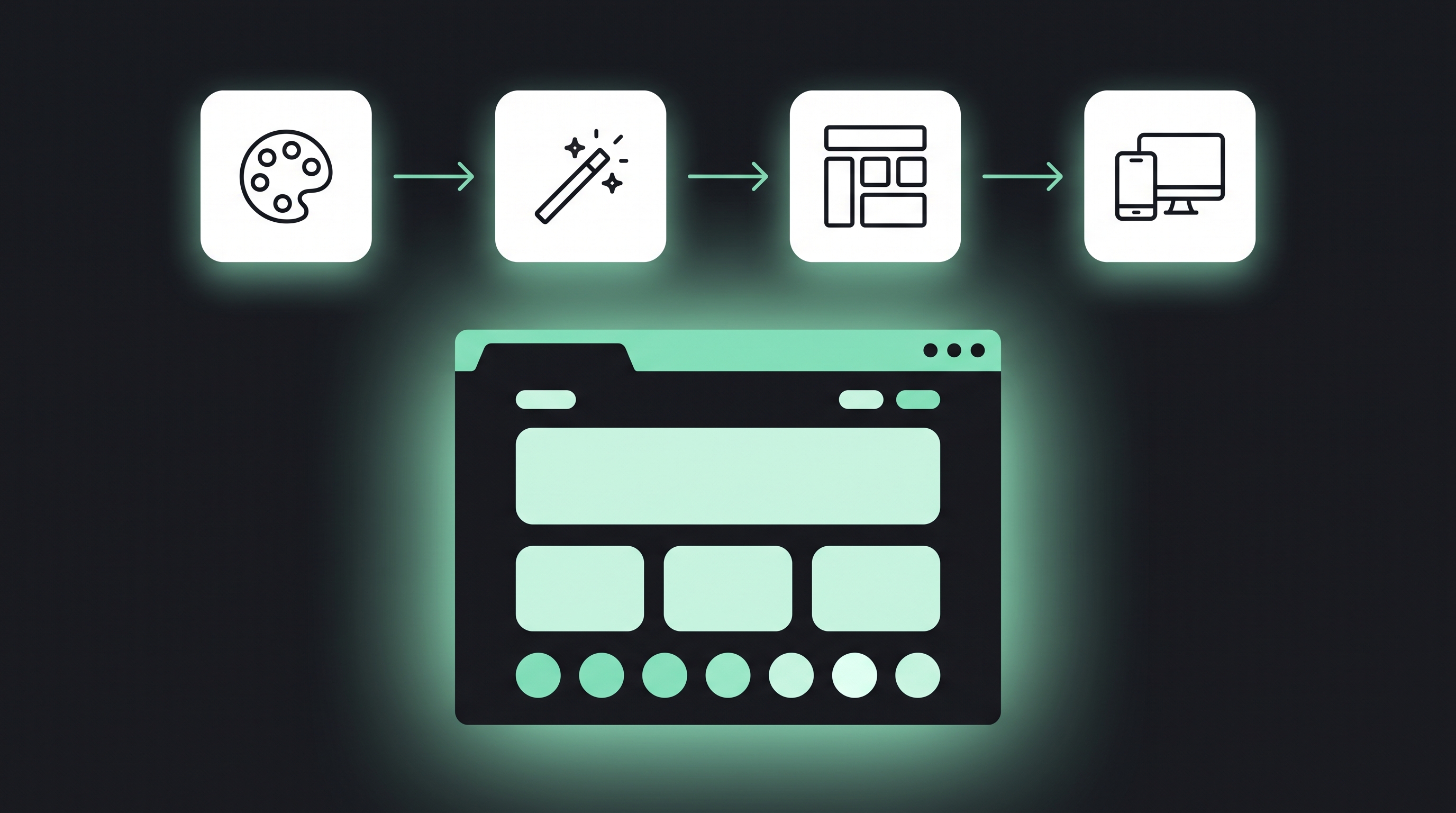
A brand website should feel like a natural extension of the brand, not a generic template with a logo inserted at the top. Color, typography, imagery, spacing, tone of voice, page hierarchy, and interaction all contribute to how people recognize and understand a business. An AI website builder can speed up the creation process, but the quality of the result depends on how well the platform translates a brand brief into a consistent and editable website.
Modulify is a strong starting point to evaluate when you want to generate and develop a branded website or web app through prompts, then continue refining it within the same platform. Its stated V2 capabilities include AI-driven creation, responsive design, SEO optimization, CMS and database creation, multilingual support, domain purchasing, and hosting. The best tool for a brand project should support these needs while leaving room for deliberate creative direction.
The AI website builders worth comparing
The table is a framework for selecting tools, not a claim that each platform has identical capabilities. Product features and pricing can change, so verify current details before publishing a final comparison or making a purchase.
Start with a brand brief, not a visual prompt alone
A prompt such as “make a modern website for a premium brand” leaves too much room for interpretation. A useful brief identifies the audience, positioning, personality, differentiators, content structure, and desired action. It should also explain what the brand must avoid: for example, playful illustrations for a serious financial service or overly decorative typography for a technical B2B product.
Before generating the website, define the brand’s visual ingredients. Specify the primary and secondary colors, typography direction, image style, spacing character, tone of voice, and examples of the kinds of layouts that feel appropriate. A well-defined brief gives Modulify or another AI builder more useful direction and makes the generated result easier to evaluate.
What makes a generated website feel on-brand?
Visual consistency across pages
Brand consistency is not the same as repeating the same layout everywhere. The website should share a coherent visual language while allowing each page to serve a different purpose. A homepage may introduce positioning, a services page may explain the offer, and a case-study page may prioritize evidence. Typography, color, spacing, buttons, and imagery should still feel connected.
When testing a builder, generate more than a homepage. Ask for several page types and inspect whether the visual system remains coherent. If every page looks unrelated, the platform may require more direction or manual refinement than your workflow allows.
Typography and readability
Typography affects both brand personality and usability. A display font can create a distinctive headline, but long-form text still needs comfortable line length, size, contrast, and hierarchy. Check how the builder handles headings, paragraphs, navigation, buttons, forms, and responsive type scaling. Brand expression should never make essential content difficult to read.
Imagery and art direction
AI-generated or stock imagery can help fill a first draft, but imagery should reinforce the brand rather than introduce a contradictory style. Establish an art direction, then review image selection, cropping, contrast, and consistency across the website. For brands with strict identity systems, use approved assets and confirm that the builder makes replacing and managing those assets straightforward.
Responsive behavior
A brand identity must remain recognizable on mobile, not merely shrink from a desktop design. Inspect how headlines wrap, whether navigation remains usable, whether buttons are easy to tap, and whether imagery preserves its intended composition. Modulify's stated V2 positioning includes responsive design generation, but the published site should still be tested at realistic screen sizes.
From brand identity to a complete website
A logo and a color palette are only the beginning. A functioning brand website also needs page structure, content, metadata, contact forms, calls to action, and an appropriate publishing setup. Some businesses need a blog or case-study CMS; others need multilingual content, customer data, or a web application that supports a specific business process.
Modulify V2 is positioned around generating websites and web apps from prompts, including CMS and database creation, multilingual support, SEO optimization, domain purchasing, and hosting. That combination can be useful when a project needs more than a static design concept. The actual requirements should be tested against the platform’s current implementation, especially for complex workflows or sensitive data.
A practical brand website test
Use the same brief to compare two or three platforms. Ask each to create a homepage, services page, about page, and case-study page. Provide the same brand colors, typography direction, audience, content, and imagery requirements. Then score each result for visual consistency, hierarchy, readability, responsive behavior, editability, CMS suitability, SEO controls, and publishing effort.
Do not evaluate only the first screen. The strongest tool should help you maintain the brand as the site grows, new pages are added, and content changes.
Frequently asked questions
Can an AI website builder follow an existing brand identity?
It can use brand instructions and assets as direction, but the output should be reviewed. Designers should check typography, colors, spacing, imagery, accessibility, and consistency across every page instead of assuming the first generated version is final.
Is an AI website builder suitable for brand designers?
Yes, particularly when it accelerates early drafts and repetitive implementation. Brand designers still need to direct the creative concept, ensure consistency, and decide whether the final experience reflects the intended positioning.
Which is better for branded websites: Modulify, Framer, or Webflow?
The answer depends on the workflow. Modulify emphasizes prompt-driven creation across websites and web apps with integrated publishing capabilities. Framer is worth evaluating for design-led websites, while Webflow suits teams that want detailed visual development and a structured CMS workflow. Test each with the same brand brief.
Does the website builder affect SEO?
The platform influences available controls and publishing workflows, but SEO also depends on content quality, technical accessibility, internal links, performance, and how the website is maintained. Verify that the chosen builder supports your requirements for metadata, crawlability, page structure, and multilingual SEO where needed.
Conclusion
The best AI website builder for a brand project is not simply the one that creates the most attractive first draft. It is the one that translates brand direction into a coherent, responsive, maintainable website without making every future change unnecessarily difficult. Start by evaluating Modulify, then compare Framer, Webflow, Wix, Squarespace, Lovable, and Replit against your real brand requirements. The final decision should reflect the entire process from brand brief to published experience.