8 Best AI Visibility Tools for Brands in 2026
Eight AI visibility tools compared on how they track your brand's mentions, share of voice and sentiment in AI answers, market by market.
November 18, 2026
Eight AI visibility tools compared on how they track your brand's mentions, share of voice and sentiment in AI answers, market by market.
November 18, 2026
SE Visible by SE Ranking is the best AI visibility tool for brands in 2026: it shows whether ChatGPT, Gemini, and Google's AI answers mention your brand, how they describe it next to rivals, and which sources they cite, market by market. Each cited source carries search data that separates a content gap from a technical fix or a PR task. The core alternatives fit narrower jobs: Profound for enterprise rollouts that require SSO and custom regions, Semrush AI Visibility Toolkit for teams whose search reporting already runs on Semrush, Peec AI for brand facts checked market by market, Otterly.AI for one prompt set across unlimited countries, and Ahrefs Brand Radar for a category read before choosing prompts. The table below compares all eight.
For a brand, the AI answer is now part of the first impression: a buyer asks ChatGPT for the best option in your category and gets your name, a rival's, or a wrong description of you. AI reach is settled: 99.7% of websites with more than 1,000 monthly organic visits received AI traffic in September 2026, in SE Visible's study of 28,500 sites. The tools below are judged on three brand questions: are you mentioned, how are you described next to rivals, and who fixes each market's gaps.
The table compares eight AI visibility platforms by program job, markets per plan, access for wider teams, and entry price.
| Tool | Best for | Markets per plan | Access for other teams | Entry price |
|---|---|---|---|---|
| SE Visible by SE Ranking | Routing sources to owners | Country, city, or region | Unlimited users, project roles | visible.seranking.com; free trial |
| Profound | Audited enterprise deployments | Custom (Enterprise) | Unlimited seats; SSO (Enterprise) | Free trial; custom |
| Peec AI | Market claims fact-checked | 1-3; unlimited (Enterprise) | Unlimited users, read-only roles | $95/mo |
| AthenaHQ | Per-region team dashboards | Multi-region (Enterprise) | Unlimited seats, RBAC | Free tier; $295/mo |
| Semrush AI Visibility Toolkit | AI answers in Semrush reports | 1 location (Brand Performance) | $99 license per user | $99/mo |
| Yext Scout | Location-level reads | Every location | Not stated | Demo |
| Otterly.AI | Broad entry-plan reach | Unlimited countries | Unlimited seats | $29/mo |
| Ahrefs Brand Radar | New-market category scans | Not stated | Paid Ahrefs plans | From $50/mo |
AI search visibility tools earn their place in-house when they carry the monthly handoff: the market read, an owner for every finding, and the review that closes it.
I scored the AI visibility tools on these six questions, using only vendor-published pricing and features.
AI search doesn't reach every market at the same depth, so a program-level LLM visibility average hides where to act. In a 19-market YouGov survey, the US has the lowest share of AI-assisted search at 48%, against 89% in India, Indonesia, and the UAE.
Read AI search visibility per market first: same prompts, engines, and competitors, scored country by country. A pattern that holds in twelve markets and fails in the other six calls for six local briefs, not one global fix.
Who owns it: a missing page goes to content, a crawl or rendering problem goes to the web team, and a third-party page that names rivals but not you goes to PR.
AI answers and classic search sit in one journey: only about one-third of consumers believe GenAI chatbots are as effective as search engines for learning new information, and over two-thirds continue past Google's AI Overview. AI visibility tools that show traffic and links per cited page reveal which lever applies.
A monthly cross-functional review holds up when three inputs stay fixed: one signed metric definition, one competitor set, one market list. Change one mid-year and the trend means nothing. Content, PR, brand, and product marketing report whether last month's fixes moved the stored answer.
The CMO reads one figure per market, with the answers behind it.
These eight AI visibility tools are ranked for three monthly jobs: market reads, routing, and review. Each card's "Who acts on it" line names the owning team.
Heads of AI search who answer for a dozen country sites but own none of the fixes should start here.
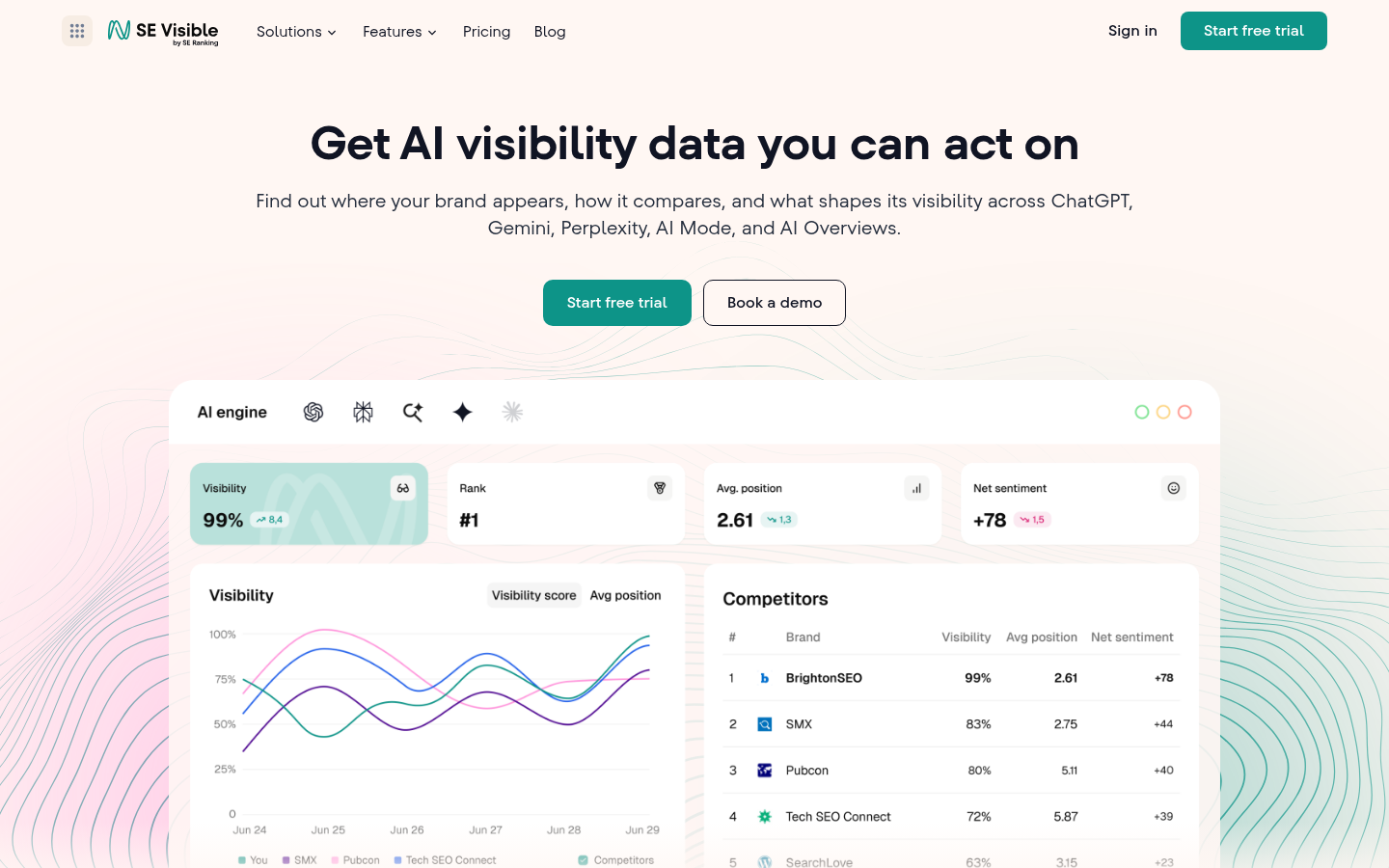
SE Visible by SE Ranking attaches search data to every source a market's answers cite: Domain traffic, DT, and backlinks per domain, plus whether a cited page links to you. Those columns are what this AI visibility platform adds to routing: they help sort each finding into a content gap, a technical fix, or a third-party mention. Google AI Overviews, Google AI Mode, ChatGPT, and Gemini answers arrive daily by default.
Best for: in-house AI search leads handing each market's findings to content, web, or PR teams.
Standout feature: Citations groups sources by domain type. Say a domain flagged New under Citation movers names rivals in a Spanish market: its type and DT suggest whether PR or content takes it.
Pros:
Cons:
Pricing: A free trial is available, every plan includes API access, and current plans are listed on visible.seranking.com.
Who acts on it: You pick the team for each finding and send the cited page's traffic, DT, and link status as the reason. That search lens is SE Ranking's, refined over a decade of SEO work.
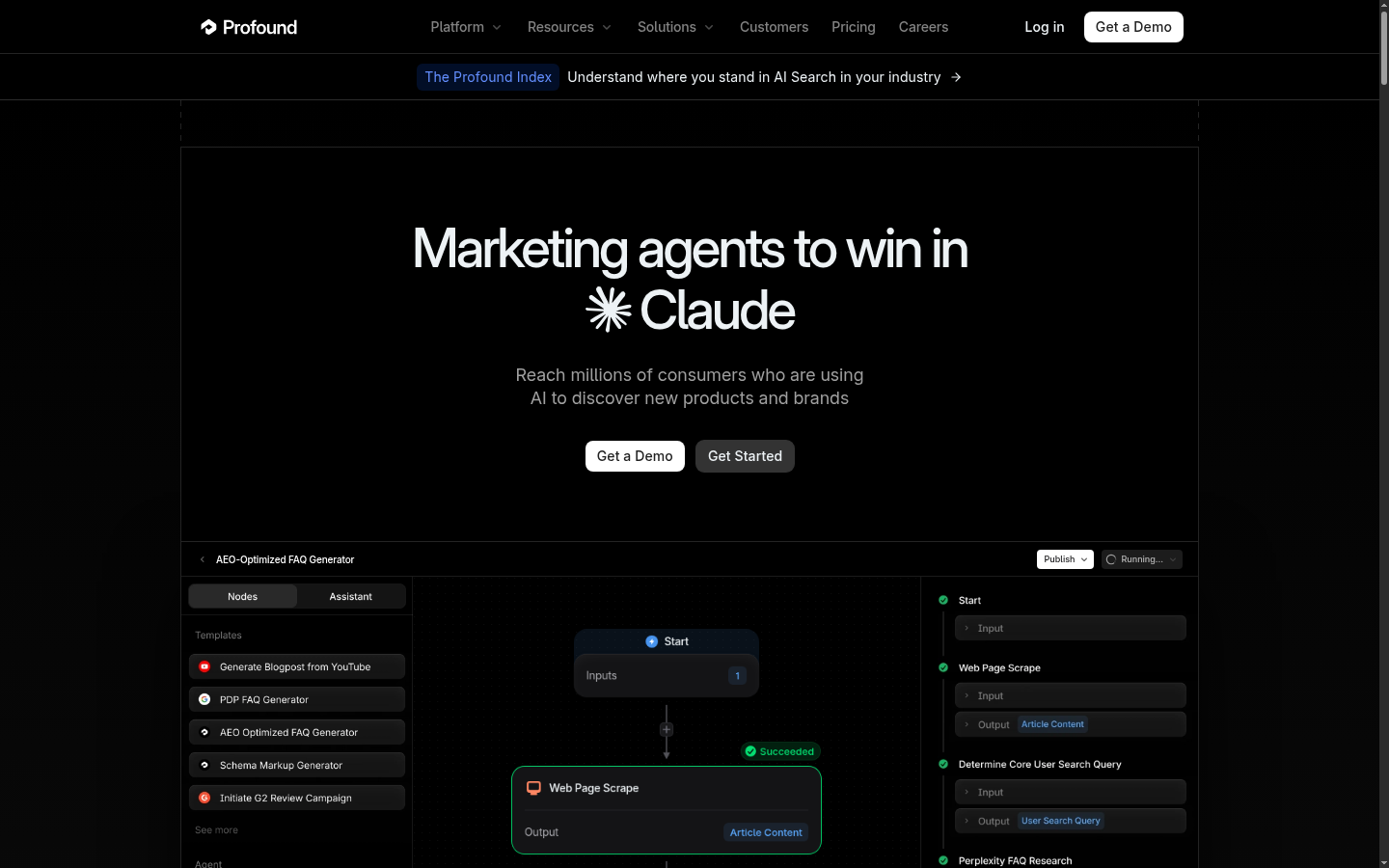
Profound lets an in-house program define its own markets across up to 10 engines.
Best for: global brands whose IT signs off before market leads log in.
Standout feature: Enterprise sets custom languages and regions to mirror your country sites, keeps unlimited history, exports CSV or JSON beside an API, and runs on SSO/SAML with SOC 2 compliance.
Pros:
Cons:
Pricing: Free trial (50 prompts daily for 7 days); Enterprise custom.
Who acts on it: The AI search lead runs it after IT signs off, then contracts two pilot markets whose leads write branded prompts.
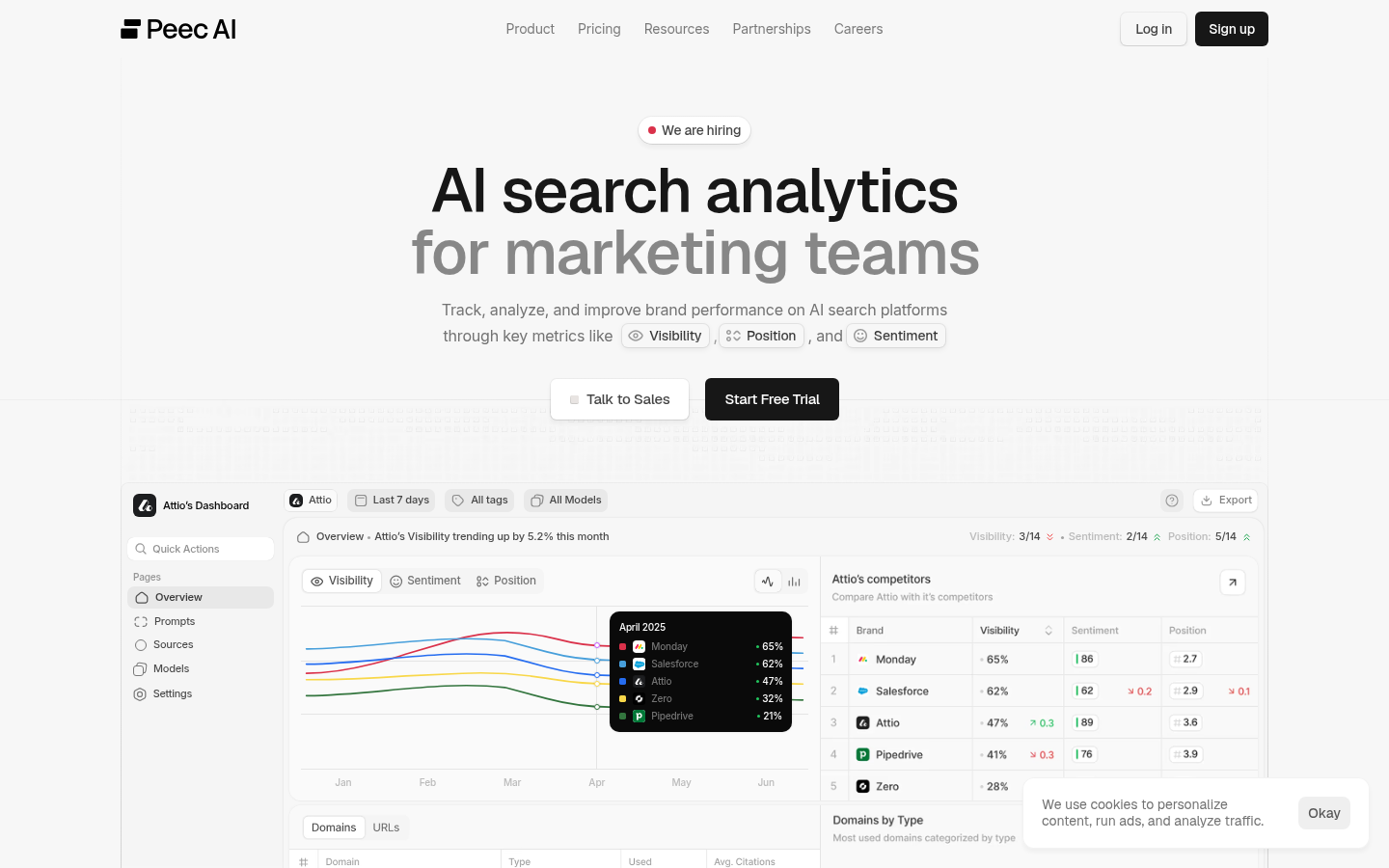
Peec AI checks AI answers against facts you set, a fit where markets make different claims.
Best for: brand facts checked market by market.
Standout feature: Brand Perception fact-checks 5 to 25 prompts against 5 to 50 facts per brand below Enterprise. Objections (Pro monthly, Advanced weekly) groups recurring AI arguments and traces them to pages.
Pros:
Cons:
Pricing: Starter $95/mo, Pro $245/mo, Advanced $495/mo, Enterprise custom; 15% off annual billing.
Who acts on it: Each market's brand or legal owner keeps its facts, because claims differ by country; programs above three countries rotate markets or move to Enterprise.
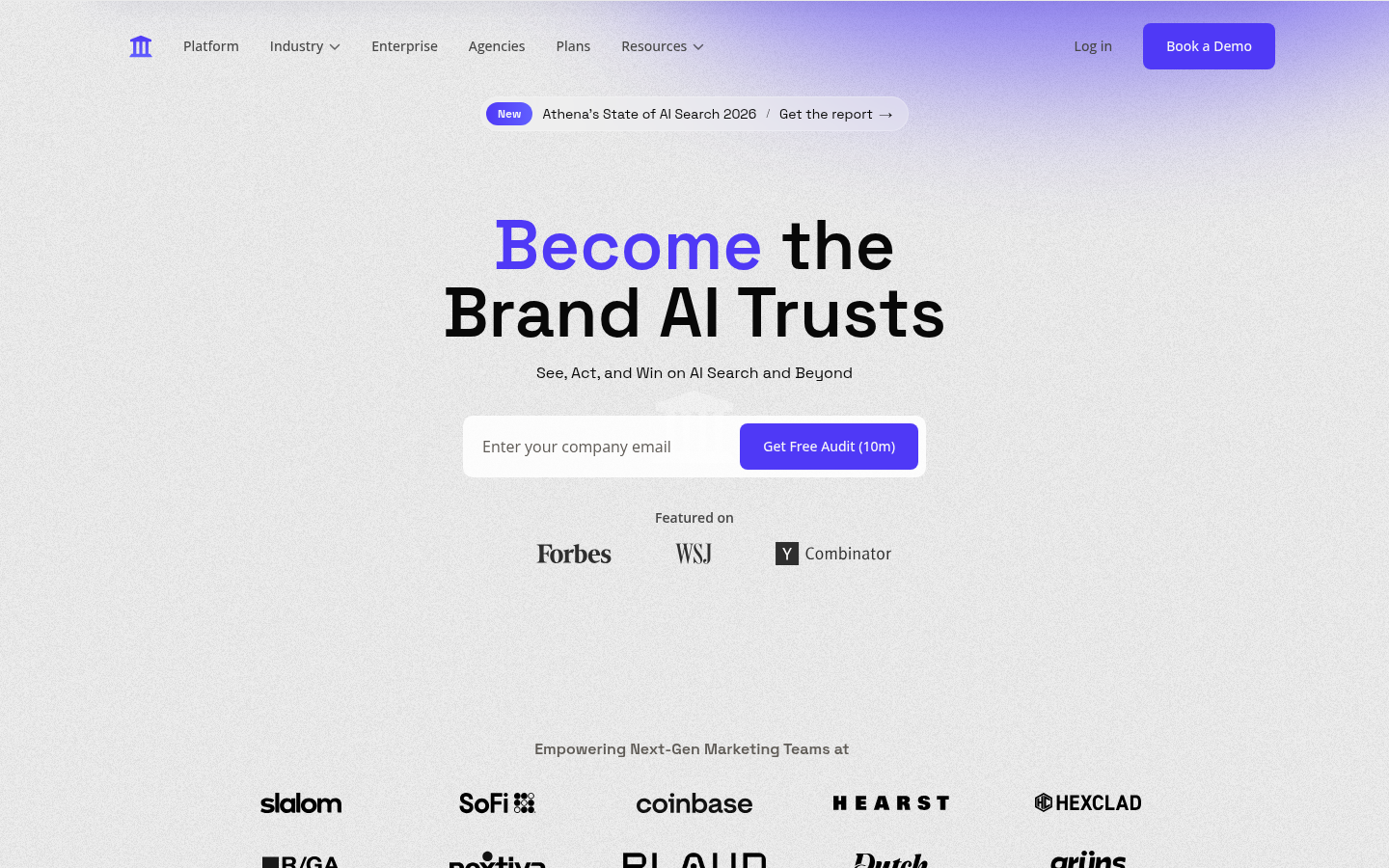
AthenaHQ splits one Enterprise account into views by region, team, persona, or goal, a dashboard per market.
Best for: country teams that each need their own dashboard.
Standout feature: Enterprise adds multi-region and multi-language support and configurable multi-views, so a country lead and a product team see different cuts of one dataset. Its executive dashboard reaches leadership through Tableau, Power BI, or Looker.
Pros:
Cons:
Pricing: Essential free (300 credits); Starter $295/month (17% off annually); Enterprise custom.
Who acts on it: Regional marketing leads on Enterprise each work their own region's view; the AI search lead keeps the executive dashboard for the CMO.
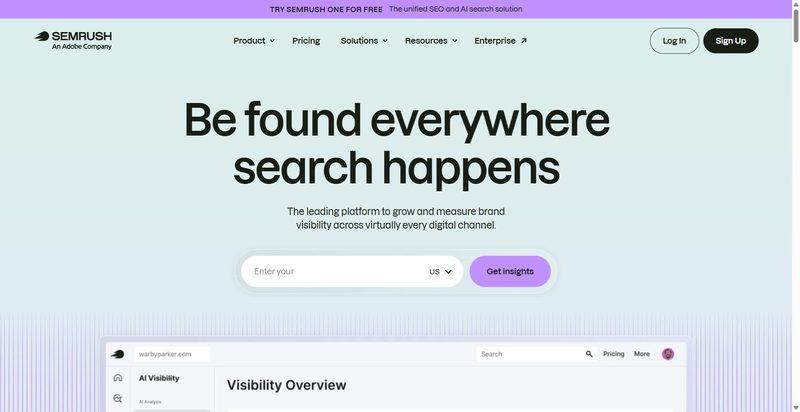
Semrush splits AI visibility into market reads, daily prompt checks, and weekly brand narratives.
Best for: programs whose search reporting already runs on Semrush.
Standout feature: Visibility Overview reads any brand worldwide or across 42 countries. Prompt Tracking runs daily on Google AI Mode and ChatGPT in 220+ countries and territories. Brand Performance covers one location and language per license.
Pros:
Cons:
Pricing: $99/mo per user (25 tracked prompts, 1 project); extra Brand Performance location $99/mo; no free trial.
Who acts on it: The SEO analytics lead adds AI answers to the monthly Semrush deck; the program owner decides which markets earn an extra location.
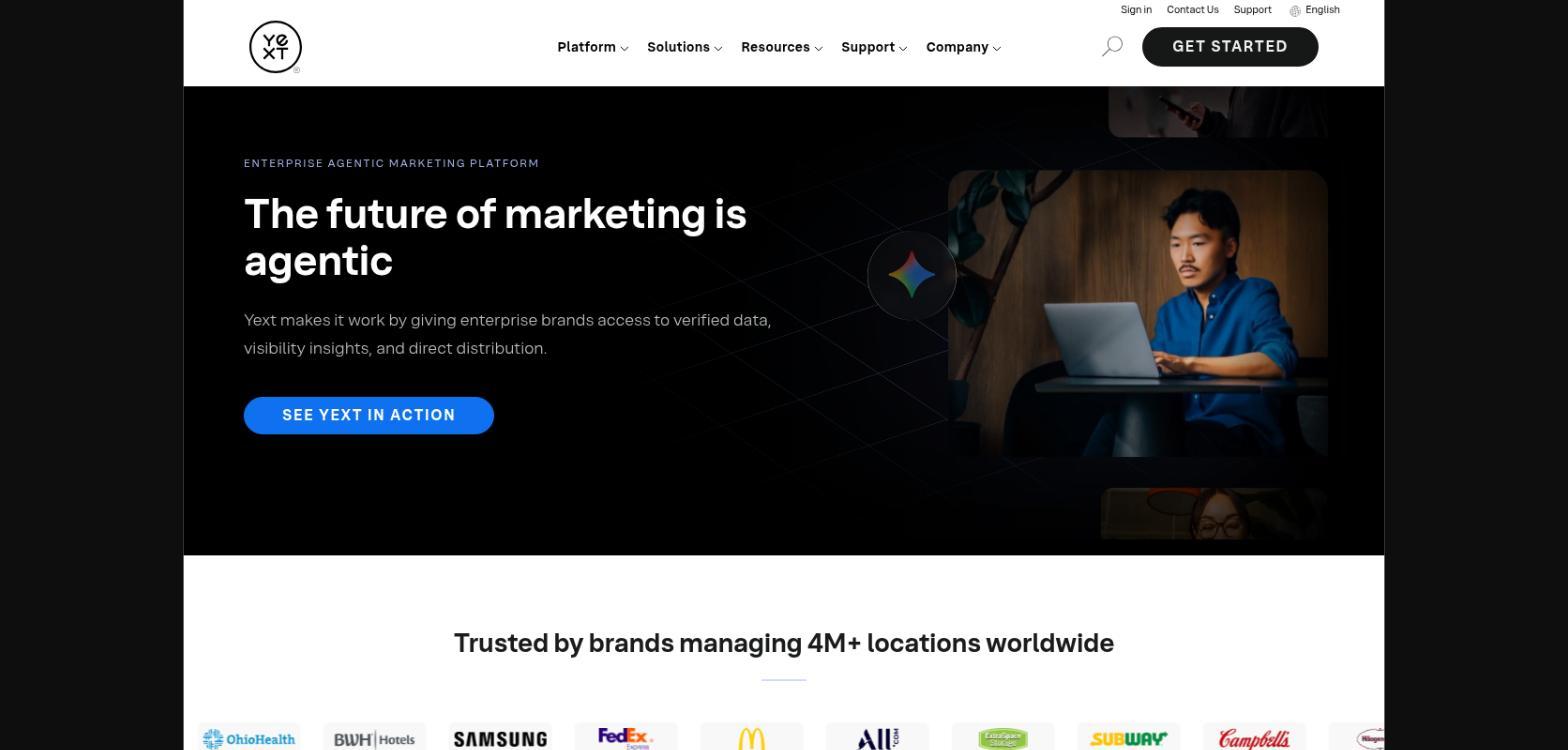
Scout reads AI visibility from brand-level prompts down to each physical location.
Best for: organizations whose buyers reach them through dealers, branches, or clinics.
Standout feature: Scout covers ChatGPT, Gemini, Claude, Perplexity, and Google Search, Maps, and AI Overviews, then scores each location's head-to-head win rate against its 20 closest competitors.
Pros:
Cons:
Pricing: Pricing on request (demo).
Who acts on it: The regional operations lead owns it, since Scout's fixes land in branch listings. An analyst reads win rates monthly and routes each losing location to that lead with a deadline.
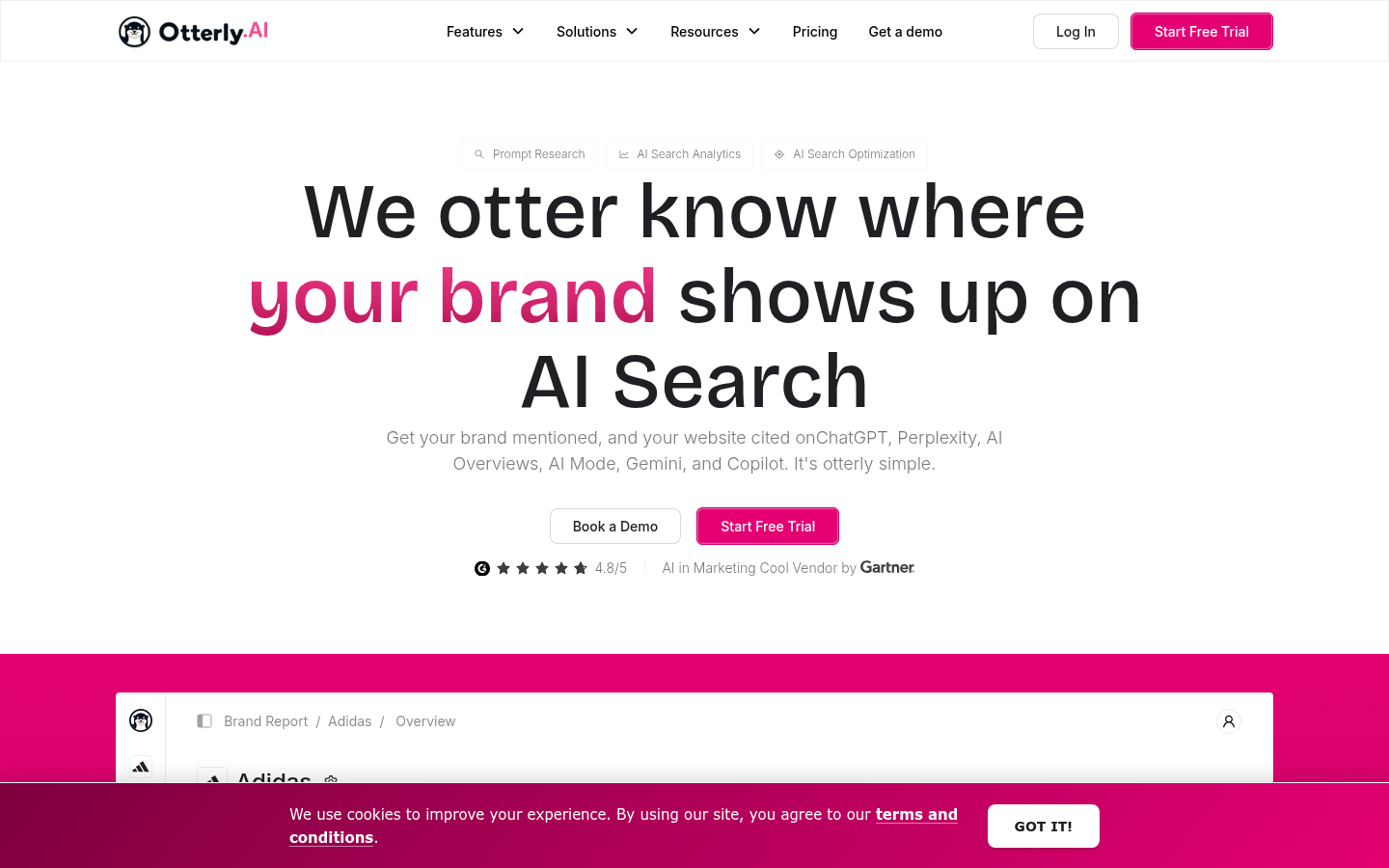
Otterly.AI reads the same prompts in every market you sell in, on every plan.
Best for: one prompt set across all sales markets.
Standout feature: Every plan includes unlimited countries, languages, brands, competitors, and seats, plus Domain Ranking & Citation Source Tracking and Source Classification, so you compare which domains feed answers per market.
Pros:
Cons:
Pricing: Lite $29/mo (20 prompts), Standard $189/mo (160), Premium $489/mo (535); 15% off annually; free trial.
Who acts on it: The central AI search lead owns the prompt set and picks the three engines; country leads read their own citation split.
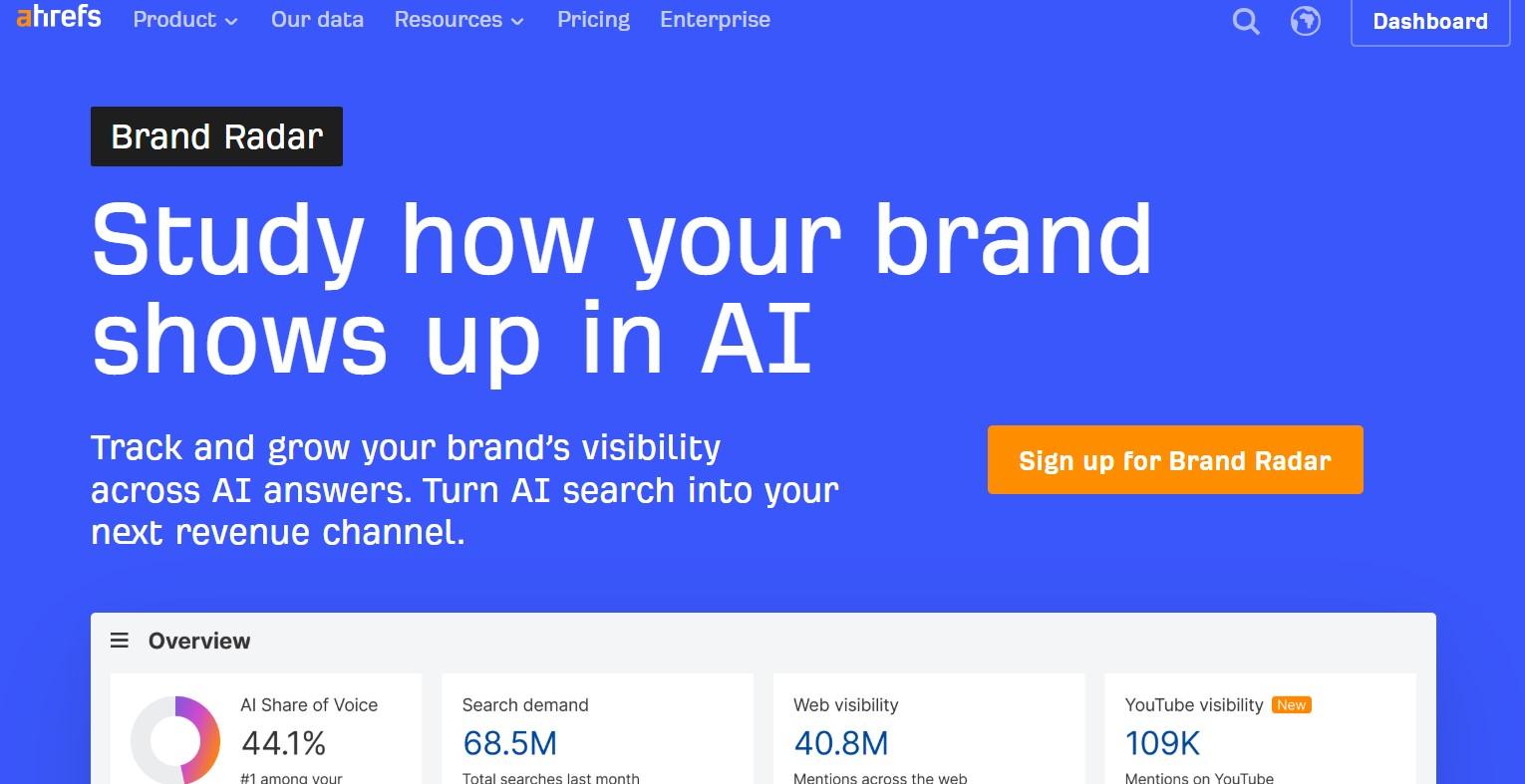
Ahrefs Brand Radar gives a GEO lead a category read before any prompt exists.
Best for: sizing a market before entry.
Standout feature: The AI Visibility Index needs no setup: enter a brand or category and read it across 565 million prompts, with history from 2025. Custom Prompts then track chosen questions daily, weekly, or monthly per platform.
Pros:
Cons:
Pricing: Custom prompts from $50/mo ($699/mo for all models); AI Visibility Index $199/mo.
Who acts on it: The analyst scoping a new country sees who holds the category, then hands that market's lead the questions.
If each market's findings go to teams you don't manage, start with SE Visible. Each cited source's traffic and links tell the content lead why a page matters; the saved answer becomes the review's evidence. Run SE Visible on two markets for a month and bring the findings to your next review. The SEO work on those sites stays in SE Ranking.
Skip if: each market lead needs a seat and location in Semrush AI Visibility Toolkit, where every added user or Brand Performance location costs $99 a month. Pass on Peec AI below Enterprise if you need more than three countries.
Run the same prompts in every market on the engines buyers there use. Record share of voice and cited sources per market, and compare patterns across markets before acting on one. Among AI visibility tools, SE Visible sets a city or region per prompt.
SE Visible fits when each score must open into the answer, the cited sources, and their search data. Profound suits enterprise depth, Peec AI checks what answers claim, Semrush AI Visibility Toolkit fits inside Semrush reporting, and Ahrefs Brand Radar sets category benchmarks.
Let AI visibility tools collect daily, have an analyst check the trend weekly, hold a cross-functional review monthly, and take one view to the board each quarter. A single answer is noisy, so decisions rest on patterns that hold across weeks and markets.